


Box Away
4.6996.00 Reviews
App Specs
- Version
- 1.001
- Updated On
- License
- Free
- Downloads
- 500,000+
- Developer
- Unico Games Studio
- Categories
- Puzzle
- Platform
- Android
Screenshots
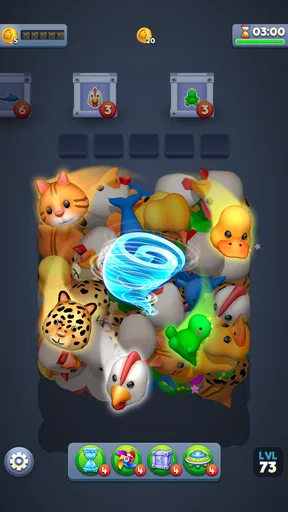
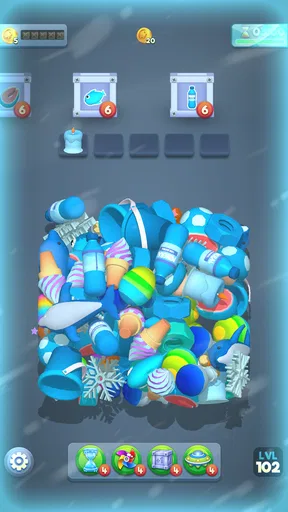
 Analysis by AppCompare
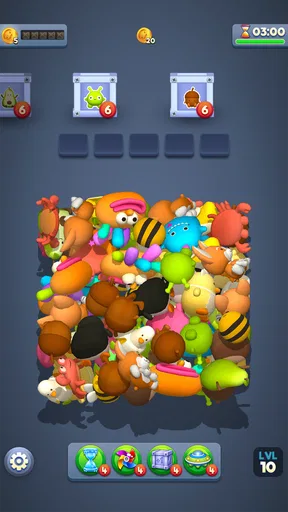
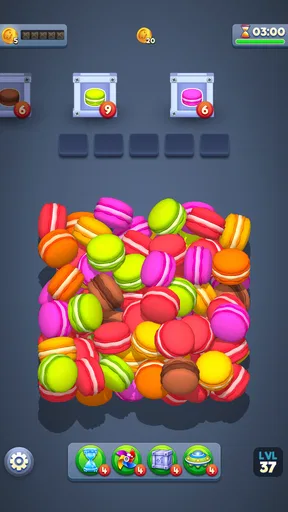
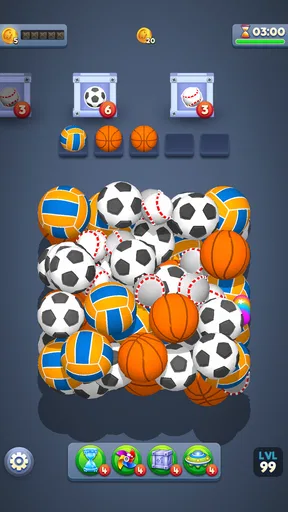
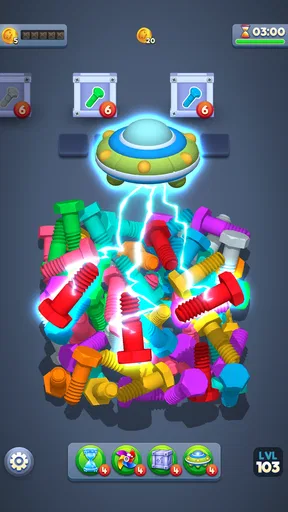
I picked up Box Away expecting a simple sorting diversion, and that is exactly where its appeal lies. It is a free puzzle game from Unico Games Studio in which I drop, sort, and collect three-dimensional objects into boxes. The idea is easy to understand within moments, but the physical arrangement gives each level a more hands-on feel than a flat matching game. I found myself making small plans, correcting careless moves, and enjoying the quiet satisfaction of turning a cluttered space into an orderly one.
The game is aimed at Everyone, runs on Android devices using at least Android 6.0, and its offline design makes it especially convenient for short sessions away from a stable connection. It has reached over 500 thousand installs and holds a 4.6 average from around 12 thousand ratings, which suggests that its relaxed puzzle style has found a sizeable audience. My experience was positive overall, although the same calm simplicity that makes it approachable may feel too gentle for players who want a story, competitive rankings, or demanding brainteasers.
How the first goals make the game easy to enter
The opening objective is immediately readable: identify the objects, work out where they belong, and fill the appropriate boxes. I did not need a long tutorial or a complicated rulebook before beginning. That directness matters on a phone, where I may only have a few minutes and do not want to learn several overlapping systems before the first satisfying result.
What makes the basic goal more interesting than ordinary sorting is the three-dimensional presentation. Objects occupy space, so I have to pay attention not only to what an item is but also to where it sits in relation to everything around it. A careless selection can leave the remaining arrangement less convenient, while a sensible order can make the next few choices obvious. The puzzle therefore starts with a very small planning demand: look before acting.
I think that early goal works best for people who enjoy visual tidying. There is a pleasant rhythm in scanning the scene, spotting a matching group, and placing it into a box. It is not trying to overwhelm me with narrative context or elaborate mechanics. Instead, the game uses the simple promise of completion as its motivation: keep sorting until the space is cleared.
That also explains why it works well as an everyday break. I can imagine opening it while waiting for an appointment, during a commute without dependable mobile service, or after dinner when I want something interactive but not emotionally intense. Because the central task is visible at a glance, I can return after a pause without having to remember a complicated plot or a long chain of instructions.
The early stages also reveal an important trade-off. The game is welcoming because it does not demand specialist puzzle knowledge, but players who prefer deduction, wordplay, or elaborate logic may find the first goals familiar. Its pleasure comes from spatial awareness and orderly action rather than from discovering a hidden story or solving a multi-step mystery.
Worth Reading Before You Choose

EA SPORTS FC Mobile 26 Is a Bigger Football Game, but It Takes Time

Flipboard Shows What News Apps Must Do Beyond the Feed

Switching to Android Auto Means Rethinking Your Driving Routine

Google Calendar Makes a Crowded Week Easier to Manage

Ludo King Makes the Most of the Minutes Between Plans

Baby Panda World Brings Quick Play to Modern Phones, but Its Game Library Feels Busy
Small decisions matter more than fast tapping
My most useful adjustment was to stop treating every object as an equally good next move. I began by checking which items were easy to identify and which ones might be covering or obstructing something useful. Clearing the obvious pieces first can be tempting, but it is not always the cleanest route. A short pause to inspect the whole arrangement usually produced fewer awkward follow-up moves.
That habit gives the game a little more depth than its relaxed presentation suggests. The goal remains simple, yet the order of operations can influence how smoothly the level develops. I would not call it a punishing strategy game, but it rewards attention. For me, that was the first sign that the experience could sustain more than one casual session.
Another practical tip is to use the boxes as visual anchors. Rather than scanning every object repeatedly, I focused on one destination at a time and searched for the pieces that belonged there. This reduced visual noise and made progress easier to read. It is a small workflow, but it turns the game from random tapping into a deliberate sorting routine.
Progress signals, pacing, and the changing challenge
Box Away communicates progress mainly through the state of the play area. Every correctly sorted object makes the scene less crowded, and each completed box provides a clear short-term target. I liked this because the feedback is immediate without needing a large amount of explanation. When a level begins to empty, I can see that my choices are working before the final move.
This kind of progress signal suits a relaxing puzzle particularly well. The game does not need to interrupt the flow with a dramatic reward every few seconds; the cleaner layout is already the reward. I found the visual transformation more motivating than a generic counter would have been. It gives the player a reason to continue while keeping attention on the objects and their destinations.
The pacing is similarly measured. A session can be approached as a single small task rather than a commitment to a long campaign. That makes it suitable for people who like to play in fragments. I could stop after reaching a natural point and return later without feeling that I had abandoned a complicated objective.
At the same time, the gentle pace will not suit everyone. If you want a puzzle game that constantly increases pressure, introduces new rules at a rapid rate, or tests speed, this one may feel restrained. Its identity depends on reducing friction, so it does not create the same urgency as timed match games or increasingly complex logic challenges.
The available release is version 1.001, and the game’s straightforward structure makes it easy to understand what kind of experience it is offering. I would not approach it expecting a broad adventure or a deep progression simulator. I would approach it as a focused sorting game whose satisfaction comes from making orderly decisions and watching a busy arrangement become manageable.
Where the difficulty feels fair
The strongest part of the challenge is the balance between recognition and planning. Seeing that two objects belong together is only part of the task; I also need to decide when to move them. That creates a mild difficulty curve without requiring the game to become harsh. The challenge can come from clutter, visibility, and sequencing rather than from obscure rules.
I appreciated that this style lets me improve through observation. When I made a less useful move, the lesson was usually understandable: I had acted before checking the remaining space, or I had focused on one obvious group while overlooking a more practical route. That is a healthy kind of failure for a casual puzzle because it encourages a better method instead of making the player feel helpless.
Players should still set the right expectations. This is not the sort of challenge I would choose when I want to spend an hour proving a difficult theorem or mastering a complex board. Its difficulty is compact and visual. The game asks for care, but it remains approachable, which is one reason the Everyone rating feels appropriate.
For younger players, the clear sorting objective can be easy to understand, while adults may appreciate the calming routine. I would nevertheless recommend that parents treat the free-to-play model thoughtfully, since optional purchases range from $1.41 to $89.99 per item. The game itself is free to start, but the possibility of in-app spending is worth remembering on a shared device.
What keeps the loop going, and where it may lose force
The main retention strength is the desire to finish what is in front of me. A partly sorted scene creates a natural pull toward completion, and the next decision is usually visible immediately. This differs from games that rely on a large collection of characters or a story cliffhanger. Here, the motivation is more modest but also more dependable: I want to see the current arrangement resolved.
That loop can be surprisingly effective for short breaks. I often prefer a game that gives me a contained task rather than one that pressures me to maintain a long daily routine. The offline format reinforces that convenience. I can use it in places where online alternatives are inconvenient, and I do not have to build my session around a connection.
Still, retention based on completion has limits. Once the sorting pattern stops feeling fresh, some players may want more variety than the core activity provides. I would especially hesitate to recommend it to someone who needs constant unlocks, social competition, or a strong sense of character development to stay interested. The game’s calm loop is a feature for one audience and a limitation for another.
There is also a difference between relaxing repetition and empty repetition. In my view, Box Away stays on the better side when I pay attention to the order of moves and treat each level as a small spatial problem. If I rush through every scene without thinking, the experience becomes much flatter. The game rewards a mindful approach, so its value depends partly on how deliberately I play.
How it compares with familiar puzzle alternatives
Compared with match-three games, this offers less emphasis on rapid combinations and more on arranging physical objects into destinations. I would choose a match-three title when I want flashing feedback, quick chain reactions, or a more energetic tempo. I would choose this one when I want to slow down and make a sequence of tidy, visible decisions.
It also differs from traditional jigsaw puzzles. A jigsaw usually gives me a fixed image and asks me to assemble it from pieces, while this game focuses on classification and placement in a three-dimensional scene. That makes the interaction feel more like organizing a drawer or sorting a messy tabletop than reconstructing a picture.
Against serious logic games, its advantage is accessibility. I can understand the immediate task without studying a formal system. The disadvantage is that a dedicated logic fan may find the mental demands too light. In that case, a nonogram, Sudoku, or spatial strategy title would probably provide a more substantial challenge.
The offline capability is another practical distinction. Many modern puzzle games are designed around connected services, recurring events, or online rewards. Box Away is better suited to a player who wants a self-contained activity. If your priority is a large community or constantly changing competitive content, a connected alternative would be a stronger match.
Who should play it and my progression verdict
I recommend Box Away to anyone who enjoys visual organization, gentle spatial planning, and short offline sessions. It is particularly comfortable for players who want a puzzle that can be understood quickly but still benefits from thinking about move order. The free entry also makes it easy to try before deciding whether the loop fits your taste.
I would skip it if your ideal puzzle game is built around demanding deduction, a dramatic campaign, fast reactions, or multiplayer rivalry. It is also not the best choice for someone who dislikes free games with optional purchases, especially when individual in-app items can reach $89.99. That does not erase the appeal of the core activity, but it is an important part of the decision.
My best advice is to play slowly at first. Inspect the whole arrangement, identify the most useful destination, and avoid moving an obvious object merely because it is available. When the scene becomes crowded, work from the pieces that are easiest to classify and use the boxes to reduce the visual search. These habits make the experience more satisfying and help the challenge come from planning rather than frustration.
The game’s progress design is modest but coherent. Early goals are clear, progress is visible in the changing arrangement, and the challenge comes from increasingly careful sorting rather than a sudden demand for speed. Its retention comes from completion and routine, not from elaborate systems. That makes the experience easy to return to, although it may not hold players who need constant novelty.
Unico Games Studio has kept the focus narrow, and I think that is both the reason to try it and the reason to keep expectations realistic. Box Away is at its best as a calm, tactile sorting break, not as a full-scale puzzle adventure. I enjoyed the quiet concentration it encourages, especially when playing offline and treating each level as a small organization problem. For the right player, that focused simplicity is enough to make it a worthwhile free download.
Pros
- Simple interface makes files easy to browse and organize.
- Supports quick access to documents from different devices.
- Useful sharing tools for sending files and folders.
- Automatic syncing keeps updated files available across devices.
- Helpful search features reduce the time spent finding files.
Cons
- Free storage is limited compared with some competing cloud services.
- Some advanced features require a paid subscription.
- Large uploads may depend heavily on your internet connection.
- Offline access may require files to be saved individually first.
- Privacy-conscious users may prefer stronger control over data storage.
FAQs for Box Away
What is Box Away and how does the game work?
Box Away is a casual puzzle game focused on moving, arranging, or clearing boxes through increasingly challenging levels. Its gameplay is designed to be easy to understand, making it suitable for short sessions, while later stages require more planning and careful timing. Before downloading, players should expect a simple concept that gradually becomes more strategic as new obstacles and level layouts are introduced.
Is Box Away free to download and play?
Box Away can generally be downloaded for free, although the exact availability of advertisements, optional purchases, or premium content may depend on the version and platform you use. The free experience is usually enough to try the main gameplay, but some features may be supported by ads or offered through in-app purchases. Check the store listing before installing if you want to avoid unexpected costs.
Does Box Away require an internet connection?
Box Away is primarily suited to casual play, and many of its basic levels may be available without a constant internet connection. However, an online connection can still be required for advertisements, cloud-related features, updates, leaderboards, or in-app purchases. If offline access is important to you, test the game after installation with mobile data and Wi-Fi disabled, since requirements can change between versions.
Is Box Away suitable for children and all age groups?
Box Away uses straightforward puzzle mechanics and does not depend on complex controls, so it can be approachable for children, teenagers, and adults. Nevertheless, parents should review the app-store age rating and privacy information before allowing younger players to use it. Advertisements, optional purchases, and any external links are also worth checking, particularly on devices shared with children.
What devices are compatible with Box Away, and is much storage required?
Compatibility depends on the specific Android or iOS version available in your region, as well as the operating system installed on your device. Box Away is typically designed for modern smartphones and tablets, and casual puzzle games usually require only a modest amount of storage. Before downloading, review the official store requirements and keep some free space available for updates and saved game data.


